Glamour Definition: An In Depth Guide
Glamour is much more than just a stylish word it’s a cultural concept with deep historical roots evolving meanings and wide influence across fashion media psychology and language. This comprehensive article breaks down everything about glamour definition and related clusters so that both readers and search engines see it as a definitive resource on the topic.
🌟 Table of Contents
- What Is the Definition of Glamour?
- Etymology: Where the Word Comes From
- Glamour vs. Beauty: Key Differences
- Types of Glamour Concept Clusters
- Glamour in Culture & Media
- The Psychological Appeal of Glamour
- Modern Usage & Language Variations
- Examples of Glamour in Everyday Life
- Frequently Asked Questions FAQ
- Conclusion: Why Glamour Matters
-
What Is the Definition of Glamour?
Glamour or glamor in U.S. spelling refers to a captivating alluring and attractive quality that inspires admiration excitement or fascination. It suggests more than physical beauty — it implies a sense of charm mystique and elevated style that makes two ordinary things seem extraordinary.
📌 Core Definitions
- Attractive quality: A mysterious appeal that draws attention and admiration.
- Enchanting allure: An almost magical quality as if something or someone has a spellbinding presence.
- Excitement or fascination: Beyond beauty the power to make something seem glamorous or exciting.
-
Etymology: Where the Word Comes From
The origin of glamour offers insight into its deeper meaning.
- In the Middle Ages the word grammar was associated not just with language rules but with learning and mysticism.
- Scottish speakers transformed grammar into glamer or glamour to describe a magic spell or enchantment that changes appearances.
- By the 18th and 19th centuries the term evolved from literal magic into describing the illusion of beauty and allure.
➡️ In short glamour originally meant a magical illusion and its modern sense still carries that idea of perception beyond reality.
-
Glamour vs. Beauty: Key Differences
Beauty and glamour are related but not identical.
| Aspect | Beauty | Glamour |
| Core meaning | Visual appeal | Fascinating attraction |
| Origin | Physical or natural | Crafted and perceived |
| Essence | What you see | How you experience it |
| Example | A scenic landscape | A red carpet event |
Beauty may be natural and inherent whereas glamour is usually enhanced and contextualized.
-
Types of Glamour
To fully cover the topic it helps to break glamour into related clusters:
💎 4.1 Personal Glamour
Includes fashion personal style and charisma that make individuals appear magnetic or influential.
👗 4.2 Fashion & Aesthetic Glamour
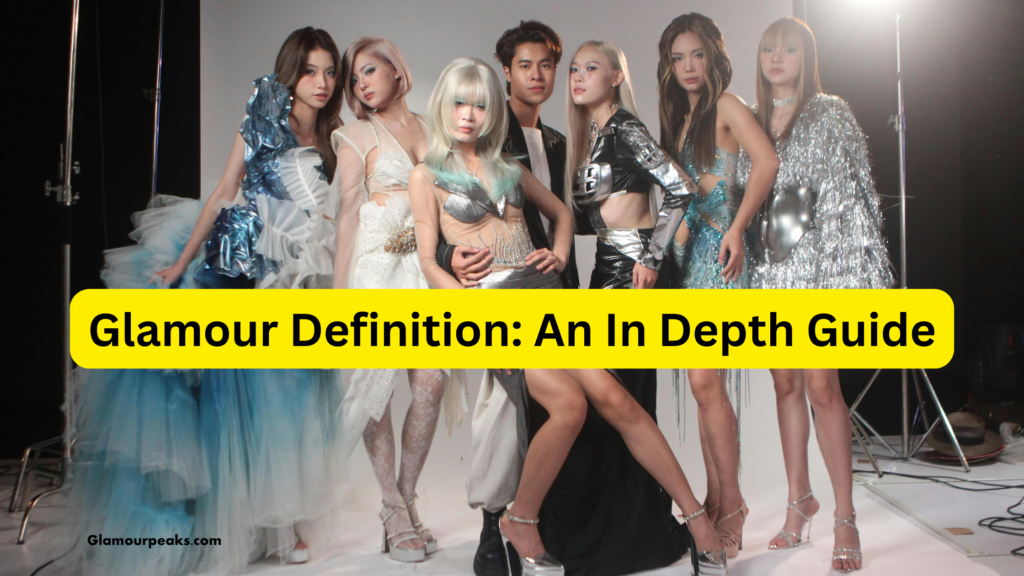
Associated with elegance makeup couture and high end brands.
🎥 4.3 Media & Celebrity Glamour
Seen in Hollywood stars iconic personalities and red carpet culture.
🪄 4.4 Historical & Linguistic Glamour
Covers the word’s evolution from magic and enchantment to modern attraction.
🧠 4.5 Psychological Glamour
Tied to how perception expectation and aspiration shape what we find captivating
-
Glamour in Culture & Media
📺 Hollywood
The film industry shaped glamour significantly creating star personas that feel larger than life through costume lighting and marketing.
📸 Photography & Fashion
Glamour photography focuses on style aesthetics and aura not just simple representation.
📰 Media Amplification
Magazines and media outlets including famous titles like Glamour have cemented glamour as a cultural ideal.
-
The Psychological Appeal of Glamour
Why does glamour captivate us?
- Aspiration: We associate glamour with success confidence and luxury.
- Perception: It’s not always about the object itself but our interpretation of it.
- Identity Formation: People often use elements of glamour to express themselves.
The idea of glamour as perception aligns with its historical roots — an almost optical illusion of attractiveness.
-
Modern Usage & Language Variations
- Spelling: Glamour UK and glamor US.
- Adjectives: Glamorous describes something possessing glamour.
- Verbal use: To glamour someone once meant to cast a spell — now it’s more metaphorical.
Today glamour is used globally in languages such as Urdu Persian and others to describe luxury elegance and visual appeal.
-
Examples of Glamour in Everyday Life
- Celebrity appearances on red carpets or fashion weeks.
- Stylized magazines and covers that evoke allure and prestige.
- Luxury products that use glamour in branding to enhance desirability.
-
Frequently Asked Questions FAQ
Q1: Is glamour the same as glamourous?
A: Glamour is a noun the quality while glamorous is an adjective describing something that has that quality.
Q2: Can everyday life be glamorous?
A: Yes — glamour isn’t only about celebrities. When something feels special attractive or exuberant it can be described as glamorous.
Q3: Why does glamour matter?
A: Glamour shapes cultural ideals consumer desires and how society conceptualizes beauty and allure.
-
Conclusion: Glamour as a Cultural Concept
Glamour is a nuanced concept rooted in language and perception. From its origin as a “magic spell” to its modern usage in fashion media and lifestyle glamour represents captivating allure and aspirational appeal. It’s not just an attribute — it’s an experience that transforms ordinary into extraordinary.
Summary
- Glamour is an alluring captivating quality tied to fascination and charm.
- It originates from Scots for magic and enchantment and evolved into its current meaning over centuries.
- Glamour plays a major role in culture media fashion and psychology.