
What is Glamour in Fashion? A Complete Guide to Meaning History Elements & Modern Trends
Introduction
Glamour in fashion is one of the most powerful yet misunderstood concepts in style. Often associated with luxury beauty and celebrity culture glamour goes far beyond surface-level attractiveness. It is a carefully constructed aura—an emotional experience that evokes desire aspiration and fascination.
In todays fashion world glamour is not just about expensive clothing or red carpet looks its about storytelling identity and perception. This article explores the true meaning of glamour in fashion its history key elements cultural significance and how it continues to evolve in modern style.
What is Glamour in Fashion?
Glamour in fashion refers to an alluring sophisticated and often idealized form of beauty and style that creates fascination and admiration. It is not just about what you wear but how you present yourself and how others perceive you.
At its core glamour is:
- Emotional – It makes people feel something desire admiration curiosity
- Aspirational – It represents a lifestyle people want
- Illusory – It often enhances reality rather than reflecting it directly
Historically the word glamour originally meant a magic spell or illusion emphasizing its connection to transformation and perception.
Glamour in Fashion COMPLETE HISTORY
-
Origins: From Magic to Style
The term glamour comes from the word grammar which in medieval times was associated with mystical knowledge and magic. Over time its meaning shifted from literal enchantment to symbolic allure.
By the 19th century glamour began to describe charm attraction and fascination especially in appearance and presentation.
-
Early 20th Century: Rise of Fashion Glamour
In the early 1900s:
- Glamour became linked with luxury femininity and sophistication
- Fashion industries began promoting beauty products couture and lifestyle imagery
- Glamour was seen as a symbol of social status and elegance
3. Hollywood Era: The Golden Age of Glamour
The 1920s–1950s marked the peak of glamour:
- Film industries created Hollywood glamour
- Celebrities became style icons
- Fashion emphasized polished looks dramatic makeup and elegance
Glamour became a form of escapism during difficult times offering people a dream-like vision of life
- Modern Era: Democratization of Glamour
Today glamour is no longer limited to celebrities:
- Social media influencers create everyday glamour
- Fashion brands market aspirational lifestyles
- Glamour is now personalized and accessible
Glamour in Fashion
To understand glamour fully you need to break it down into its core components.
-
Elegance and Sophistication
Glamour always includes refinement—clean silhouettes quality fabrics and thoughtful styling.
-
Mystery and Distance
True glamour maintains a sense of mystery or unattainability making it more desirable.
-
Effortless Appearance (Sprezzatura)
Glamour looks natural—even if it requires effort behind the scenes.
-
Luxury and Detail
Rich materials like silk velvet or sequins enhance the glamorous effect.
-
Confidence and Presence
Glamour is not just clothing—its how a person carries themselves.
Glamour vs Style vs Fashion
| Aspect | Glamour | Style | Fashion |
| Definition | Alluring aspirational appeal | Personal expression | Current trends |
| Focus | Emotional impact | Individual identity | Industry-driven |
| Nature | Illusory & idealized | Authentic | Ever-changing |
| Example | Red carpet look | Personal wardrobe | Seasonal trends |
Glamour is often confused with style but they are different. Glamour is external and constructed while style is internal and personal.
Glamour in Fashion IN TYPES
-
Classic Glamour
- Inspired by old Hollywood
- Timeless silhouettes and makeup
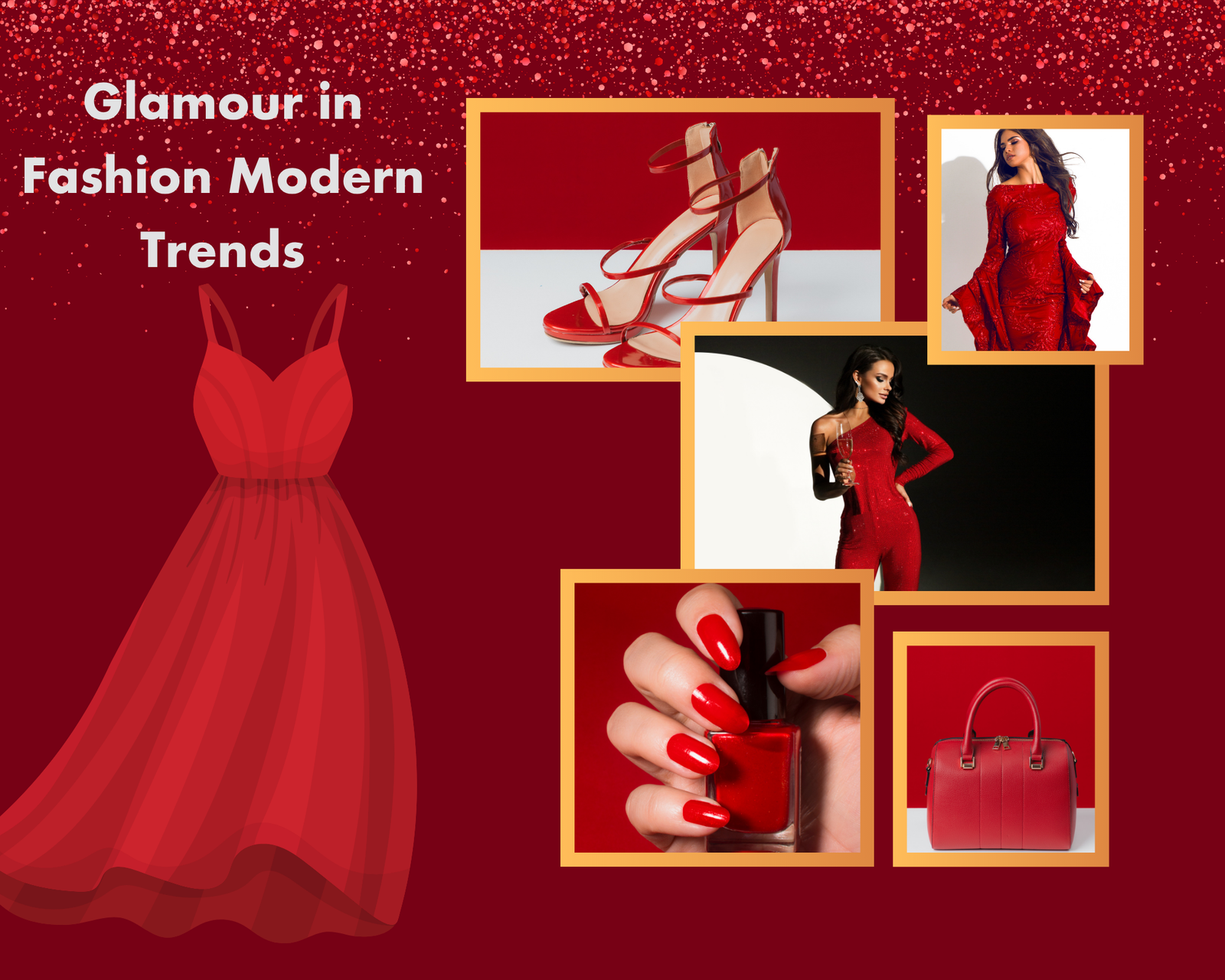
- Example: Black gowns red lips
-
Modern Glamour
- Minimalist but polished
- Neutral tones with luxury details
-
Street Glamour
- Everyday fashion with a glamorous twist
- Mixing high-end and casual pieces
-
Editorial Glamour
- Seen in fashion magazines
- Bold artistic and dramatic
Why Glamour Matters in Fashion
-
Drives Consumer Desire
Glamour creates aspiration which fuels the fashion industry.
-
Shapes Cultural Ideals
It influences what society considers beautiful or desirable.
-
Enhances Brand Identity
Luxury brands rely heavily on glamour for marketing.
-
Builds Personal Image
Individuals use glamour to express confidence and status.
Psychology of Glamour
Glamour works because it:
- Creates aspiration and fantasy
- Suggests a better version of reality
- Triggers emotional responses like admiration and longing
Experts describe glamour as an imaginative creation that evokes desire and possibility.
Common Misconceptions About Glamour
Myth 1: Glamour = Expensive Clothes
Truth: Glamour is about presentation not price.
Myth 2: Glamour = Flashy Style
Truth: True glamour is often subtle and refined.
Myth 3: Glamour = Beauty
Truth: Glamour can enhance appearance but is not dependent on physical beauty.
How to Achieve a Glamorous Look
-
Focus on Fit and Tailoring
Well-fitted clothing instantly elevates your look.
-
Choose Quality Over Quantity
Invest in fewer but better pieces.
-
Master Grooming
Hair makeup and skincare are essential.
-
Add Statement Pieces
Accessories like jewelry or heels enhance glamour.
-
Carry Confidence
The most important element—without it glamour falls flat.
Glamour in the Digital Age
Social media platforms like Instagram and TikTok have:
- Made glamour more accessible
- Blurred the line between real and curated beauty
- Created new forms of digital glamour
However this also raises questions about authenticity vs illusion as glamour remains rooted in perception.
The Future of Glamour in Fashion
Glamour is evolving toward:
- Inclusivity – Diverse body types and identities
- Sustainability – Ethical fashion with a luxurious feel
- Individuality – Personalized glamour over standardized beauty
Conclusion
Glamour in fashion is much more than sparkle and luxury—it is a powerful blend of illusion aspiration and emotional appeal. From its origins as a magical concept to its role in modern fashion and media glamour continues to shape how we see beauty style and success.
Understanding glamour allows designers brands and individuals to create not just outfits—but experiences